

Introduction to Reformer Pilates in KL
I first discovered reformer Pilates when I wanted something more dynamic than mat classes but gentler than heavy weights. In Kuala Lumpur, “reformer pilates KL” has become a popular search for people like me who want low-impact strength training with great core work and posture benefits. This article is a practical resource roundup: I’ll explain what reformer Pilates is, why it’s useful, what to expect in your first class, how to pick a studio in KL, and where to find reliable online and local resources.
Key Benefits of Reformer Pilates
Strength and posture
Reformer Pilates builds functional strength by challenging your muscles through controlled movement and variable resistance. From my experience, the reformer helps recruit deep core muscles and the posterior chain in ways that translate into better posture at the desk and less back ache. Studies and expert guidance highlight Pilates as useful for core strengthening and postural control [1][2].
Flexibility and mobility
The sliding carriage, springs and straps let you move through ranges of motion smoothly, so you improve flexibility without forcing joints. I found mobility gains especially around the hips and shoulders after a few months of regular reformer sessions, which is consistent with reviews showing Pilates improves flexibility and functional mobility [2].
Rehabilitation and injury prevention
Because reformer work is low-impact and highly adjustable, physiotherapists often use it for rehab and prehab. I’ve worked with clients recovering from minor knee and shoulder injuries who could progress safely on the reformer under guided instruction. Professional organisations recommend Pilates as part of rehab protocols when applied by trained professionals [1].
What to Expect in Your First Class
Equipment and setup
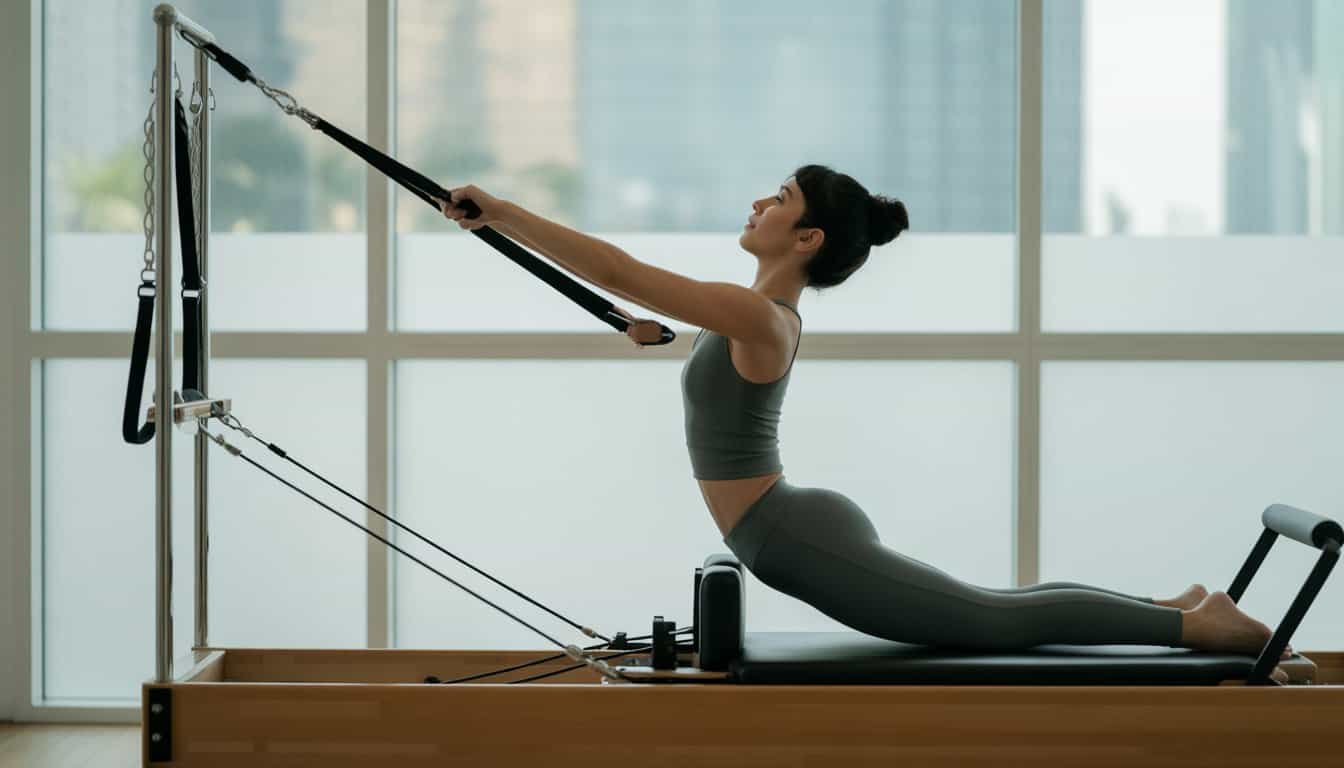
The reformer is a bed-like frame with a sliding carriage, springs, straps and a footbar. In my first class, the instructor showed me how to adjust spring tension and footbar height to suit my body—this setup step is standard and important for safety and effectiveness.
Typical class structure
Most beginner reformer classes I’ve attended follow a similar flow: warm-up and breathing cues, fundamental exercises (footwork, leg circles, bridging), core-focused sequences, and a cool-down with stretches. Classes can be private, semi-private or group sessions; expect more hands-on cueing in smaller classes.
Common beginner modifications
Beginners often use lighter spring settings, extra props (like small pads) and segmented progressions. As an instructor told me, good teachers will offer regressions (simpler versions) and progressions so you build confidence without compromising form.
How to Choose a Reformer Pilates Studio in KL
Qualifications and instructor credentials
I always ask about instructor training and relevant rehab experience. Look for certifications from recognised bodies (for example, national Pilates organisations or physiotherapy qualifications) and instructors who can demonstrate continuing education—especially if you have past injuries [1].
Studio facilities and class size
Visit studios to check equipment condition, cleanliness and how instructors manage class ratios. From my visits, smaller class sizes (or private sessions) give better individual attention, which matters when you’re learning reformer technique.
Pricing and trial classes
KL studios often offer trial sessions or introductory packages—use these to test an instructor’s teaching style and the studio vibe. Compare prices but weigh value (quality of instruction, equipment, class size) over cheapest rates; a good first-class experience sets you up for long-term gains.
Recommended Studios and Resources in Kuala Lumpur
Studio recommendations (how to pick local options)
Rather than naming specific studios, I recommend a simple local checklist I use when scouting for reformer pilates KL options: check online reviews and recent photos, ask about instructor credentials and class formats, confirm machine brands and maintenance, and request a trial. Many KL neighbourhoods—KLCC, Bangsar, Mont Kiara and Damansara—have boutique studios and physiotherapy clinics offering reformer classes; use Google Maps and Instagram to shortlist and call to ask about trial passes.
Online resources and further learning
For reliable reading and at-home supplements, I turn to established sources: professional organisations for standards and instructor info, NHS/Harvard-style health pages for general summaries, and subscription platforms for guided classes if you want to practise between studio sessions. These resources help reinforce technique and safety when combined with in-person coaching [1][2][3].
References
[1] Pilates Method Alliance — official information on Pilates education and professional standards: https://www.pilatesmethodalliance.org
[2] NHS — Guide to Pilates (overview of benefits and safety): https://www.nhs.uk/live-well/exercise/guide-to-pilates/
[3] Harvard Health Publishing — Information on core strengthening and exercise benefits (search “Pilates Harvard Health”): https://www.health.harvard.edu